
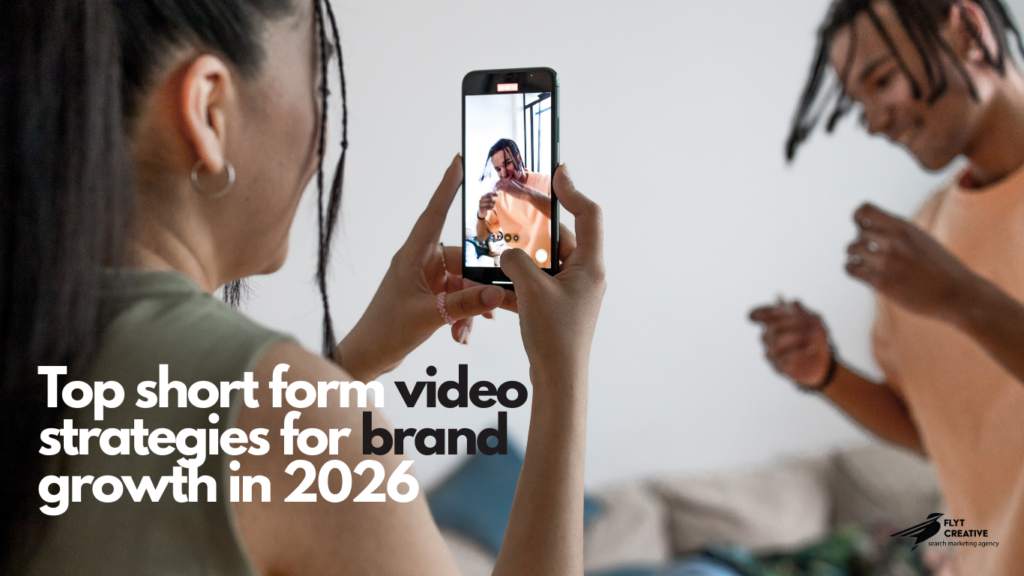
Short-form video will be one of the most powerful growth levers for brands in 2026 across TikTok, Instagram Reels, YouTube Shorts, and emerging AI-driven feeds. This blog is written for Flyt Creative with SEO, AI, and AI EO in mind so it can perform well across search, social, and AI answer engines.
Key takeaways
- Short-form video strategies that prioritize strong hooks, niche-focused content, and consistent posting will drive brand growth in 2026.
- Repurposing content, using AI tools, and optimizing for search and answer engines (AI EO) will extend the reach of every video.
- Brands that blend native platform trends with clear CTAs, storytelling, and community-building will outperform those relying on random viral attempts.
Why short-form video dominates brand growth in 2026
In 2026, short-form video is the primary way many users discover new brands, learn quickly, and decide who to follow and buy from. Algorithms prioritize engaging, watchable content that keeps users on the platform, and brands that understand this dynamic see compounding returns from consistent posting. Short-form formats are also highly shareable, meaning a single strong concept can travel far beyond a brand’s existing audience.
For Flyt Creative and its clients, this means short-form video is not a side project—it is core to a modern content strategy. When planned strategically, these clips support brand awareness, nurture trust, and guide viewers into deeper content, email lists, and offers.
Strategy 1: Hook-first, value-dense videos
The first 1–3 seconds of a short-form video determine whether a viewer scrolls past or stays. A hook-first approach is essential for brand growth because it signals relevance immediately and keeps users engaged long enough to hear the message.
Strong hooks often:
- Call out a specific audience (“Myrtle Beach business owners, stop doing this in your marketing.”).
- Tease a result or outcome (“This 30-second video will double your Reels views.”).
- Break a pattern visually or verbally (jump cuts, bold text, or a surprising statement).
Once the hook lands, the rest of the video must deliver value quickly—one promise, one insight, one tip, one transformation per clip. This “one idea per video” rule makes content easier to remember, share, and binge, which feeds platform algorithms and AI systems looking for clear, structured content.
Strategy 2: Design for vertical, sound-off, and fast consumption
Short-form videos in 2026 must be created for the real viewing environment: vertical screens, mixed sound-on/sound-off usage, and fast scroll behavior. Brands that design with these constraints in mind see higher completion rates and better performance.
Key best practices include:
- Filming vertical in 9:16, with the subject or main message centered and clear.
- Adding captions or on-screen text so the story makes sense even on mute.
- Using big, readable text and simple visuals that still work on small phones.
This approach not only helps with human viewers but also supports AI and AI EO, since clear text, structure, and visuals make it easier for systems to understand and summarize the content.
Strategy 3: Lean into niche-specific content, not generic trends
While trending audio and formats still matter, generic “viral” content rarely builds a loyal audience or real growth for brands. The most effective short-form video strategies in 2026 focus on niche-specific content that speaks directly to a defined target.
For example, instead of “marketing tips,” Flyt Creative might post:
- “Short-form video ideas for local HVAC companies.”
- “How real estate agents can turn one listing video into 10 Reels.”
Niche content:
- Attracts highly qualified followers who are more likely to convert.
- Signals expertise to both humans and AI systems, boosting authority.
- Makes it easier to come up with ideas because it’s grounded in real problems and questions.
This niche-first strategy aligns with AI EO, as bots and assistants prefer specialized, clearly scoped insights when choosing what to surface.
Strategy 4: Turn one idea into multiple short-form assets
Repurposing is critical for sustainable brand growth with short-form video. Instead of constantly chasing new concepts, the best strategies recycle and remix the same core ideas across formats and platforms.
From one long-form piece (a blog, podcast, or YouTube video), a brand can:
- Pull 5–10 snackable tips or quotes and turn each into an individual vertical video.
- Create before/after, “mistakes to avoid,” and “do this instead” variations of the same concept.
- Test multiple hooks for the same core message to see what resonates best.
This system multiplies output without burning out the team and gives AI tools more consistent data to learn what works for your audience.
Strategy 5: Storytelling and narrative mini-series
Short-form doesn’t mean shallow. In 2026, brands that use narrative and recurring series will see stronger retention and brand affinity than those only posting one-off tips. Viewers follow stories, not just videos.
Effective storytelling formats include:
- “Client Story” mini-series that show a transformation in 3–5 short episodes.
- “Day in the life” content for founders, creatives, or service pros.
- Serialized content like “30 days of marketing tips for small businesses.”
These narrative arcs encourage viewers to come back, binge multiple videos, and follow for more, which sends strong signals to platform algorithms and AI ranking systems that your content is worth amplifying.
Strategy 6: CTAs that drive real growth, not just views
Views and likes are helpful indicators, but brand growth comes from turning that attention into action. Strong calls-to-action (CTAs) in short-form video tell viewers clearly what to do next.
Examples of effective CTAs:
- “Follow for daily short-form video ideas for local businesses.”
- “Comment ‘GUIDE’ and we’ll send you our 2026 content calendar template.”
- “Tap the link in bio to get the full breakdown in today’s blog.”
CTAs should feel natural and value-focused, not pushy. Over time, consistent, clear CTAs help grow email lists, website traffic, and leads—not just vanity metrics.
Strategy 7: Use AI tools as your creative co-pilot
AI is a force multiplier for short-form video strategy in 2026. Instead of replacing creativity, it speeds up ideation, scripting, editing, and optimization so brands can ship more and learn faster.
AI can support by:
- Generating content ideas based on your niche, audience, and goals.
- Creating script outlines or hook variations from a single topic.
- Captions, translations, and posting schedules optimized for each platform.
AI EO comes in when you design scripts and captions using natural language queries and FAQ-style phrasing, so AI-powered assistants and recommendation systems better understand and surface your content.
Strategy 8: Optimize titles, captions, and metadata for search and AI EO
Short-form video is now deeply integrated with search behavior: users search on TikTok, YouTube, Instagram, and inside AI assistants just like they do on Google. That makes search-optimized titles and captions crucial.
Best practices:
- Use specific keywords your audience would actually type or say, like “short-form video strategies for realtors” or “how to grow your brand with Reels.”
- Write captions that read like natural answers: “Here are three short form video strategies for brand growth in 2026…”
- Add relevant hashtags related to niche, location, and industry, not just generic viral tags.
This dual optimization for search and AI EO helps your videos appear when people ask questions, whether they’re typing in a search bar or speaking into an assistant.
Strategy 9: Post consistently, test relentlessly, and double down on winners
In 2026, consistency and experimentation matter more than perfection. Platforms and AI systems favor accounts that post regularly and stay in their lane while still testing creative variables.
A simple growth framework:
- Commit to a sustainable cadence (for example, 3–5 short-form videos per week per platform).
- Test different hooks, angles, and formats around the same core topics.
- Use analytics to identify the top-performing 10–20% of videos, then create sequels, spin-offs, and updates.
Brands that treat short-form video like an ongoing lab outperform those relying on sporadic “big ideas.”
FAQ: Short-form video strategy basics
Q: How long should short-form videos be for brand growth in 2026?
A: Most brands see strong performance in the 15–45 second range, with some success in ultra-short 5–8 second loops and occasional 60–90 second explainers when the hook is strong and the content is highly relevant.
Q: How many times per week should a brand post short-form videos?
A: A common sweet spot is 3–7 times per week per platform, adjusted based on resources. It is better to post fewer high-quality, on-niche videos consistently than to post daily and burn out with off-brand content.
Q: Do we need to be on TikTok, Reels, and YouTube Shorts all at once?
A: Not necessarily. Start where your audience already spends the most time, then expand. Many brands find success focusing on one primary platform and repurposing to others once they have a proven content system.
Q: Is it still worth following trends like sounds and memes?
A: Trends can help with reach, but they should always be adapted to your niche and your message. Native, trend-aware content works best when it reinforces your brand rather than chasing virality for its own sake.
FAQ: AI, AI EO, and short-form content
Q: What is AI EO in the context of short-form video?
A: AI EO (AI/Answer Engine Optimization) is the practice of structuring your video scripts, captions, and on-screen text so AI-driven systems and answer engines can easily understand, summarize, and recommend your content when users ask questions.
Q: How can small businesses use AI without losing their brand voice?
A: Use AI for outlines, ideas, and first drafts, but always edit through your brand’s lens. Keep your tone, examples, and visuals human and specific, while letting AI handle repetitive tasks like captioning and repurposing.
By combining strong hooks, niche-specific storytelling, smart AI support, and consistent testing, brands can turn short-form video into a repeatable growth engine in 2026. For Flyt Creative and its clients, these strategies create a scalable framework that works across industries—from local service providers and real estate teams to law firms, tourism brands, and beyond.