
Listing Management
Business Listing and Citation Management so Google can verify you exist.
Your business facts. Identical everywhere.
Key Takeaways
- Google and AI assistants recommend businesses they can verify. Inconsistent information across the web makes you harder to verify and easier to skip.
- Listings management means your name, address, phone, hours, services and categories are identical everywhere they appear, and stay that way.
- This is the least glamorous local SEO work there is and one of the highest return, because it is a foundation the rest sits on.
- It matters more now than it did two years ago. Answer engines assemble recommendations from verifiable facts, and listings are where those facts live.
- Start with a free Scorecard.
3 Markets
30 Days
Month-to-Month

Why does business listing management matter?
The problem, stated plainly
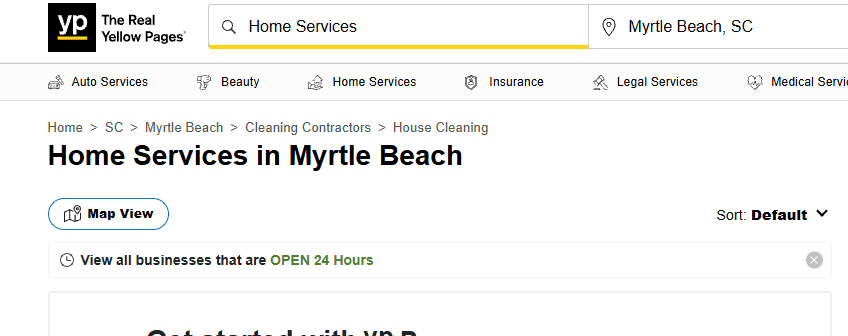
Your business is listed in more places than you think. Google, Apple Maps, Bing, Yelp, Facebook, the Chamber, a dozen directories you never signed up for, and at least one that still has the phone number from your old office.
Every one of those is a data point. When they agree, Google gets more confident about who you are and ranks you accordingly. When they disagree, Google shrugs and ranks a business it is more sure about.
This is not a theory. It is the most common fixable reason a local business underperforms in the map pack.
Our Listing and Citation Approach
What We Manage
Google Business Profile, completely.
Every field, not the four everyone fills in. Categories, services, service areas, attributes, hours including holiday hours, description, products, and photos.
The core network.
Apple Maps, Bing Places, Facebook, Yelp, and the aggregators that feed hundreds of smaller directories downstream.
Industry and local directories.
The ones that matter for your category and your town. Chambers, trade associations, and the local sites that actually get traffic on the Grand Strand and in the Midlands and Upstate.
Duplicate suppression.
Listings drift. Aggregators overwrite good data with bad. Someone submits an edit to your Google profile. Left alone, a clean listing set degrades within a year.
Ongoing monitoring.
Listing AI Search Visibility
Why it matters more in 2026.
Google’s own AI Mode research found that when people ask an assistant about stores or shops, the single most common follow-up subject is “near me.” Location is the second most important attribute in the entire shopping experience, behind only price.
An answer engine cannot recommend a fact it cannot confirm. If three sources say you close at 5 and one says 6, the safest thing for the machine to do is recommend somebody else. There is no page two in an AI answer.
Your listings are where the facts live. Getting them right is now table stakes for AI search visibility, not just for map rankings.
Common Questions
Frequently Asked Questions
Can I do this myself?
Yes, and we publish DIY checklists for exactly that. It is tedious rather than difficult. Most owners start it, get through Google and Facebook, and stop. The value we add is finishing it and keeping it finished.
How long until it affects rankings?
Google Business Profile changes can move within weeks. Full citation cleanup usually shows up over two to three months as sources re-crawl and the picture gets consistent.
What if my address changed?
That is the highest-value version of this project and also the most urgent. Stale addresses across dozens of directories will suppress you until they are corrected.
Do you use an automated listings tool?
We use tooling where it saves time and do the rest by hand. Automated tools miss duplicates, cannot resolve ownership disputes, and will happily push the same wrong data to two hundred sites.
I am a service-area business with no storefront. Does this still apply?
Yes, and it is more delicate. Service-area businesses have specific rules about hiding the address and defining the radius, and getting it wrong can suppress you entirely.
Does this help with ChatGPT and AI answers, not just Google?
Yes. Assistants pull from the same underlying business data. Consistency is what makes you quotable.